

01
Faster processing for high-volume, repeatable tasks.
Turn repetitive handoffs into visible, reliable workflows with human control where it matters.
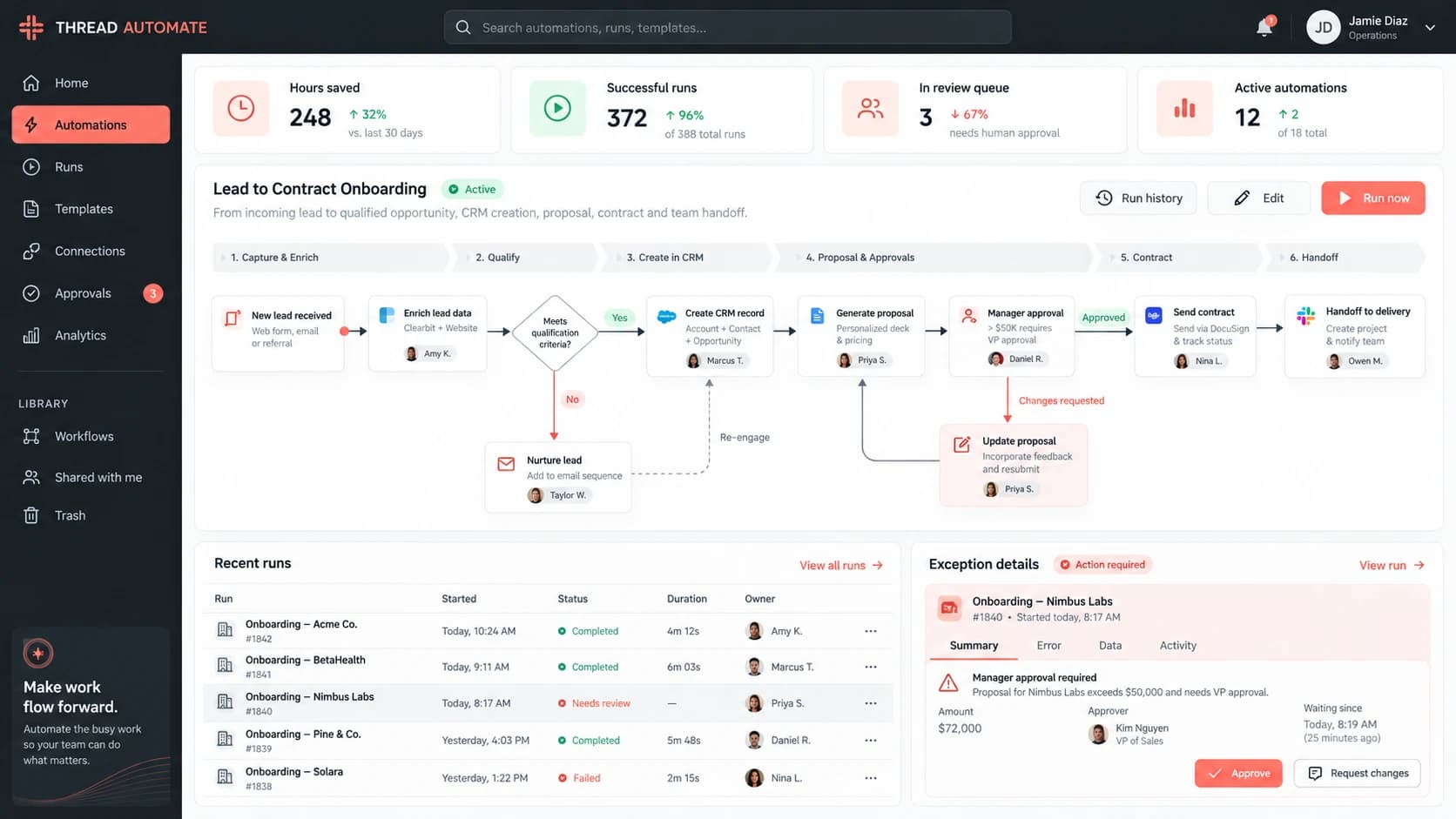


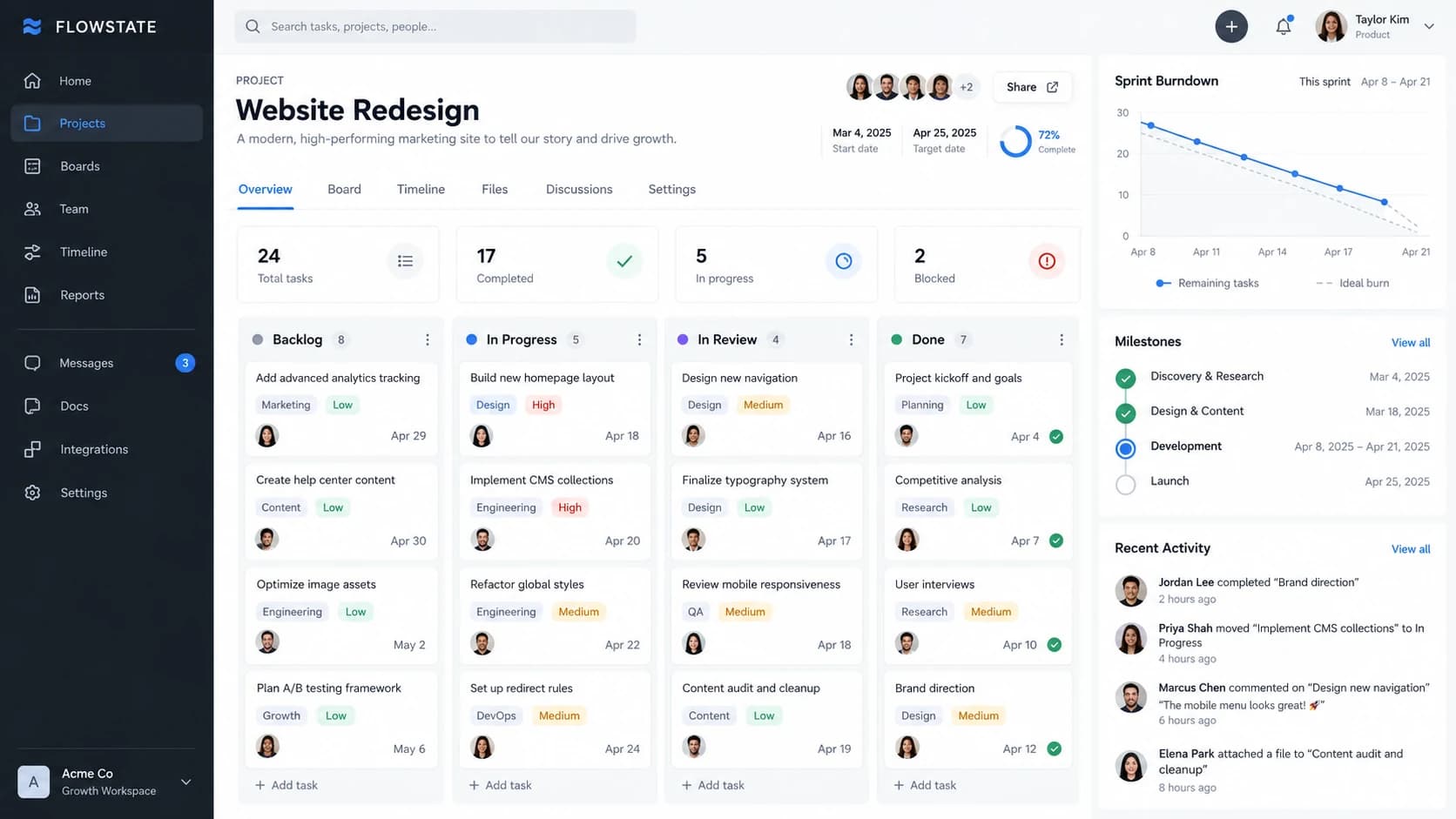

Faster processing for high-volume, repeatable tasks.
Fewer duplicate entries and avoidable handoff errors.
Visible queue status, exceptions, and accountability.
More staff time for decisions and customer-facing work.
Observe how requests move today, count volume and delays, and identify decisions, exceptions, and data sources.
Select stable steps for automation, define approvals and fallback paths, and agree on ownership for failed or ambiguous cases.
Build integrations and workflow screens, test real edge cases, and verify the output with process owners before release.
Track turnaround, error rate, exception volume, and staff effort; improve the rules as the process changes.
A routine request may pass through inboxes, spreadsheets, approvals, and disconnected systems before anyone can complete it. Staff spend time copying data and chasing status; leaders see the delay only after a customer complains. Automating a broken process without defining its exceptions can move errors faster instead of reducing them.
Choose a frequent, well-understood workflow with a clear owner, measurable delays, and manageable exceptions. We assess that fit during discovery.
Only where your policy allows it. Sensitive, unusual, or accountable decisions can remain with named reviewers and an audit trail.
Often. We assess available APIs, file exchanges, and system constraints before choosing an integration method and defining failure handling.
AI can help classify, summarize, or draft when outputs can be checked. Deterministic rules are often better for straightforward, high-stakes decisions.
We establish a baseline for cycle time, rework, exceptions, and staff effort, then compare it with live operating data after rollout.

Turn repetitive handoffs into visible, reliable workflows with human control where it matters.