

Platform architecture
Choose services and boundaries that fit the workload.
Cloud foundations that balance resilience, performance, security, and cost.


Choose services and boundaries that fit the workload.
Make environments repeatable, reviewable, and easier to change.
Automate testing and release with appropriate controls.
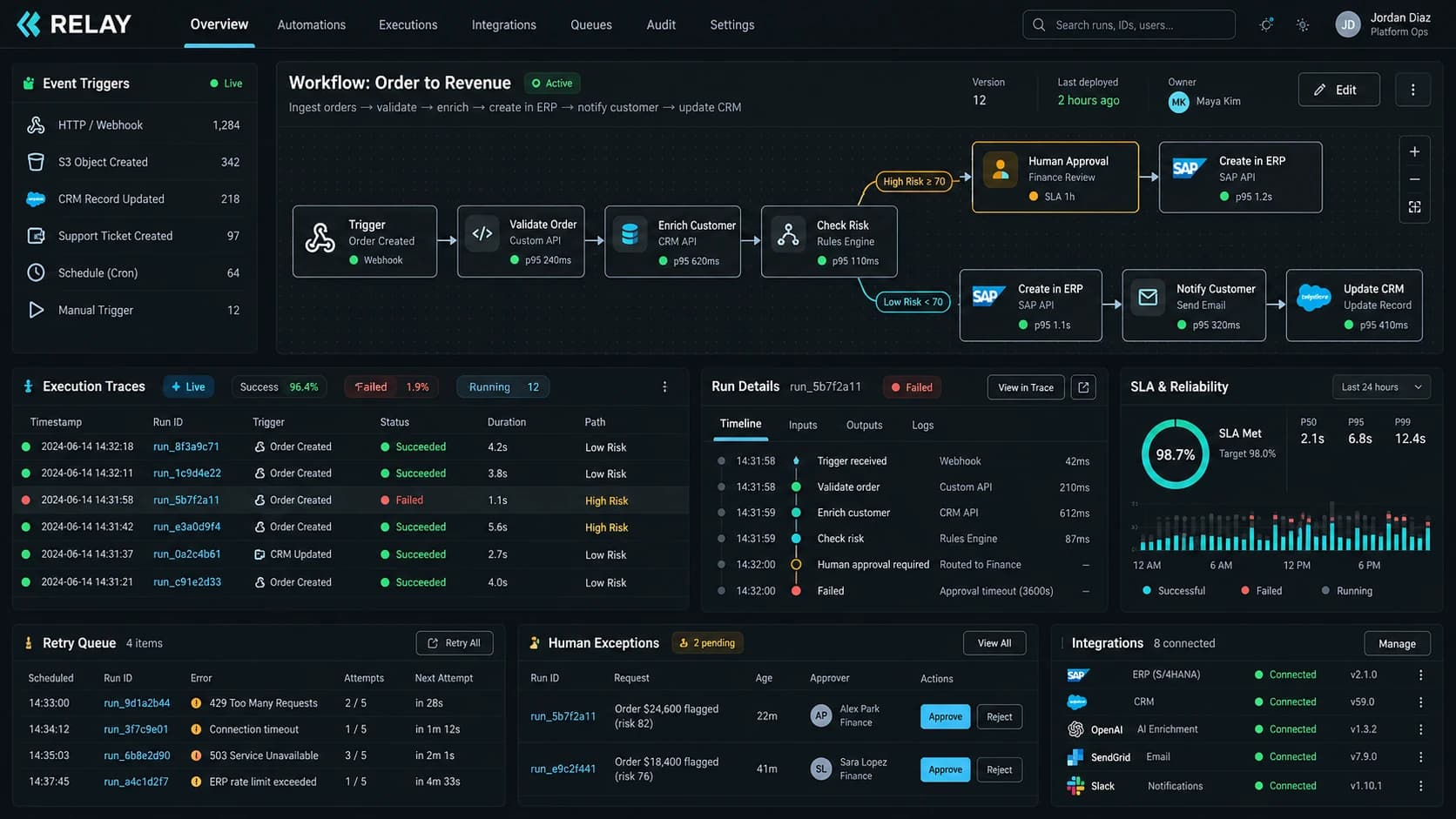
Plan monitoring, recovery, and capacity before they become urgent.
We define environment boundaries, least-privilege access, secret handling, deployment rollback, backup recovery targets, and monitoring alerts before launch. Infrastructure changes are reviewed as code where appropriate. The platform is sized to current needs with a path to scale, rather than provisioned for hypothetical peak demand.
No. We assess each workload, its dependencies, data requirements, and operating cost. Some systems are best modernized in stages or connected to cloud services without a full move.
We inventory dependencies, choose a migration sequence, rehearse data movement and rollback, and define a cutover window. The plan depends on the application’s tolerance for downtime.
We set budgets and ownership, review utilization and storage, and choose services that fit the workload. Cost is tracked alongside performance and reliability rather than after the bill arrives.
Operations still need monitoring, backups, access reviews, patching, and incident response. We document responsibilities and can support the team through an agreed maintenance plan.

Cloud foundations that balance resilience, performance, security, and cost.