
Digital delivery priorities for 2026: an agency outlook
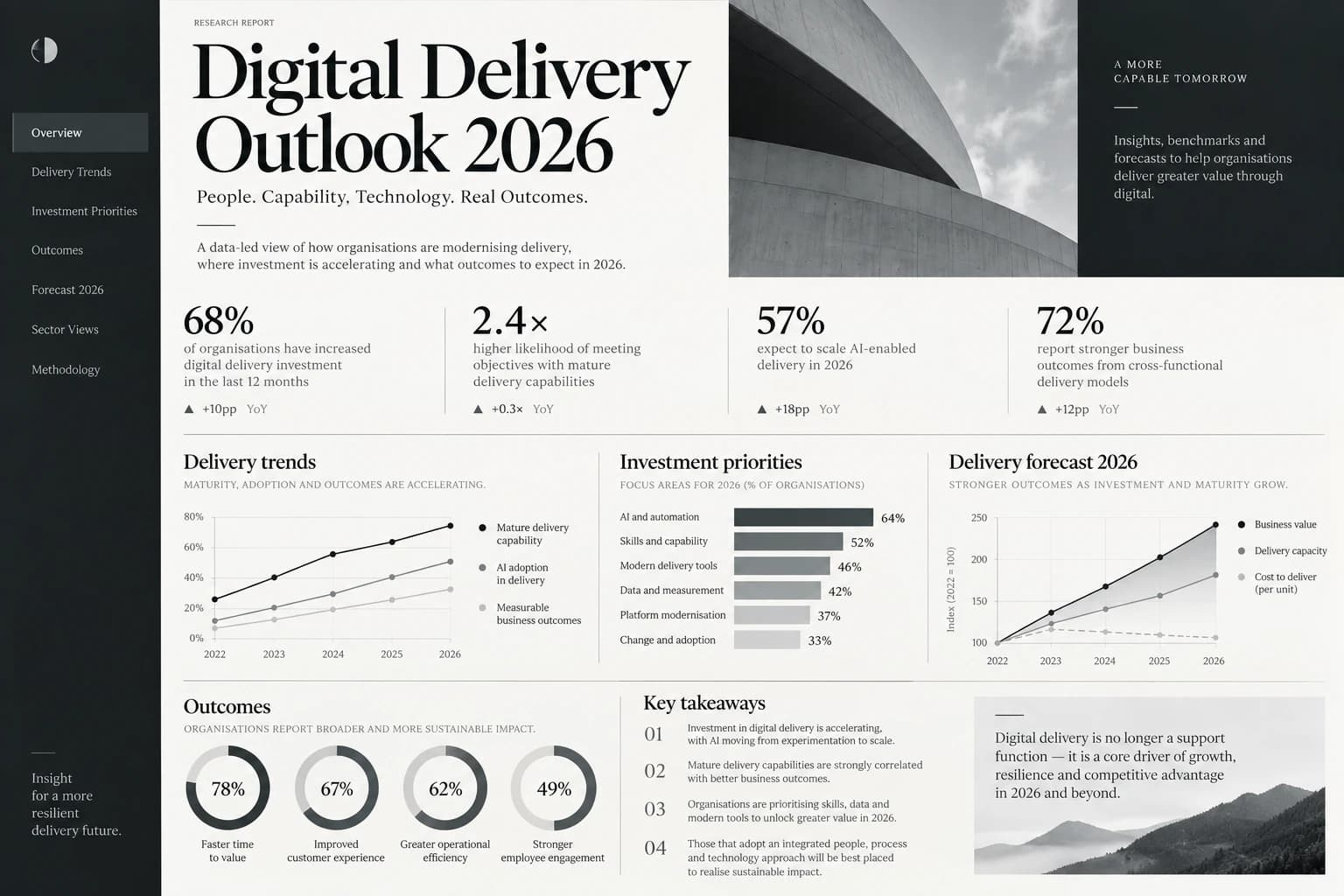
ABT's 2026 digital delivery outlook covers accountable product ownership, controlled AI pilots, resilient platforms, and a practical planning exercise.
All articles ↗Compare retain, improve, replatform, and rebuild options using service continuity, integration risk, data migration, ownership, and measurable outcomes.

Modernization should reduce the cost and risk of changing a business service. Replacing old technology can help, but a rewrite is not an outcome on its own. Start by identifying the capabilities that are hard to operate, integrate, or improve.
Map applications, data stores, interfaces, dependencies, owners, and support commitments. Look for duplicated records, manual handoffs, unsupported components, slow release cycles, and recovery gaps. Distinguish a platform problem from a process or ownership problem.
Retain a stable system when it meets current needs. Improve a constrained part with a targeted interface or replacement when that creates value sooner. Replatform only when the operational benefit justifies the move. A full rebuild needs a clear reason, a realistic coexistence period, and a data migration plan.
Define availability, security, data integrity, and rollback requirements before cutting over. Test important user journeys and exceptions against the existing service. Run old and new processes in parallel where the risk warrants it, then reconcile records before retiring the old path.
Name owners for each system boundary, data definition, and incident response path. Record architectural decisions and measurable outcomes: release lead time, incident recovery, manual work, and customer task success. Review them after each migration wave.
An effective modernization program delivers smaller, observable improvements while protecting the service people depend on today.
Retain a system when it is stable, supported, and changing it would not improve the customer or operator journey. Improve a constrained capability, interface, or data flow when the core platform can remain. Replatform when moving the existing application changes operational cost or resilience without requiring a full functional redesign. Rebuild only when the architecture or product model cannot meet important needs and the organization can support a longer transition.
If managers spend hours reconciling exports, a new dashboard is not automatically the answer. First agree on data definitions and source ownership. A staged improvement may automate ingestion and exception handling while existing tools remain in use. The team can then compare reporting effort and data quality before deciding whether a larger platform replacement is justified.
For each option, assess downtime tolerance, data migration complexity, contract and license constraints, skill availability, security obligations, rollback feasibility, and what happens to integrations during coexistence. Assign an owner to each risk. Modernization is a sequence of business decisions supported by technical evidence.
For each important system, document its business purpose, users, owner, data, dependencies, failure impact, support status, and cost to change. Add evidence from incidents, release history, user interviews, and operating effort. Rate the urgency of change separately from the attractiveness of a new platform. A system can be old yet stable, while a newer system can create serious friction.
Use the same criteria for retain, improve, replatform, and rebuild: customer benefit, continuity risk, migration effort, data complexity, security needs, operating cost, and team capability. Write down why an option was rejected. Do not assume a full rewrite removes risk; it can recreate years of behavior that was never documented. A targeted improvement may deliver most of the benefit sooner.
Suppose regional teams export different reports and reconcile them manually. One option is to rebuild the entire system. Another is to agree on shared data definitions, automate imports, and create an exception workspace while existing systems keep running. The second path can test whether the data and workflow changes solve the problem before a major platform decision. If the legacy systems still limit reliability or change speed, the evidence supports a later migration.
Most enterprises cannot switch every team on one day. Define which system is authoritative for each record during transition. Decide how updates made in both systems will be reconciled and how users will know where to work. Rehearse rollback and data restoration. Retire old components only after the new service meets acceptance criteria and historical data remains accessible where required.
The brief is a decision aid, not a substitute for a technical, contractual, or regulatory assessment of a specific estate. The right choice may differ by system. Cost estimates should include migration, training, operations, and the period when old and new systems coexist.
In the first two weeks, inventory critical systems and owners. Over the next two weeks, map one high-friction journey and its dependencies. Then compare modernization options against agreed criteria and select a narrow first change with a baseline and rollback plan. Review actual outcomes before expanding to the next system.
ABT's 2026 digital delivery outlook covers accountable product ownership, controlled AI pilots, resilient platforms, and a practical planning exercise.
All articles ↗A practical applied AI brief covering use-case selection, evaluation, human review, data boundaries, operating controls, and scale decisions.
All articles ↗Assess product discovery, product pages, cart, checkout, and post-purchase service with a repeatable ecommerce UX scorecard.
All articles ↗